
New Year’s Resolution 2026 : Build a 12-Month Training Plan with Equisense
In sport, progress doesn’t rely on motivation alone, it depends on consistency, planning, and analysis. In 2026, taking your equestrian practice to the next level means thinking like an athlete: setting clear goals, structuring your training cycles, and measuring performance session by session.
Thanks to the Equisense app, you can create a full-year training plan based on objective data tailored to both horse and rider.
Table des matières
1. Set SMART Sport Goals
A SMART goal must be Specific, Measurable, Achievable, Realistic, and Time-bound.
Forget vague intentions like “ride better.”
Examples of SMART goals in equestrian training:
- Improve the consistency of gaits at trot and canter over 3 months
- Increase endurance: maintain a 45-minute session without a drop in quality
- Rebalance the horse: reduce left/right asymmetries observed over 2 weeks of sessions
- Stabilize rhythm during upward transitions over 3 sessions
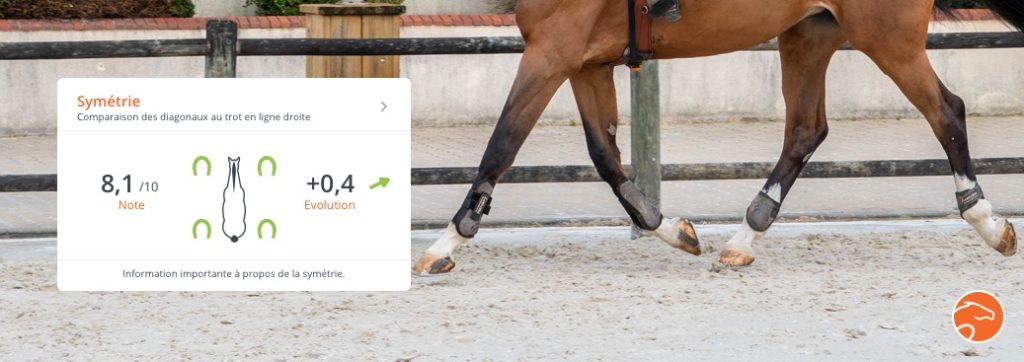
With Equisense, these goals become measurable through the locomotion indicators recorded by the sensor during each session (duration, impulsion, regularity, gait distribution, left/right rein ratio, symmetry).
👉 One goal = one metric to track.
Also read: How to create a personalized training program for your horse
2. Define Your Priority Training Areas
A successful competition season relies on three main axes, which should be worked on in parallel.
Axis 1: Horse’s Physical Condition
Goal: Build an enduring, willing, and resilient horse.
- Gradual increase in working time
- Balanced gait distribution
- Alternating effort and recovery
Equisense ensures your sessions are neither too short nor too intense, helping prevent overload.
Axis 2: Technique and Locomotion
Goal: Improve the quality of movement.
- Consistent rhythm
- Smooth transitions
- Symmetry work
Locomotion data helps identify imbalances and adjust session content accordingly.
Axis 3: Consistency and Coherence of Training
Goal: Avoid irregularity and “empty” periods.
- Number of sessions per week
- Variety of exercises
- Continuity over several weeks
Equisense history provides a clear view of long-term training consistency.
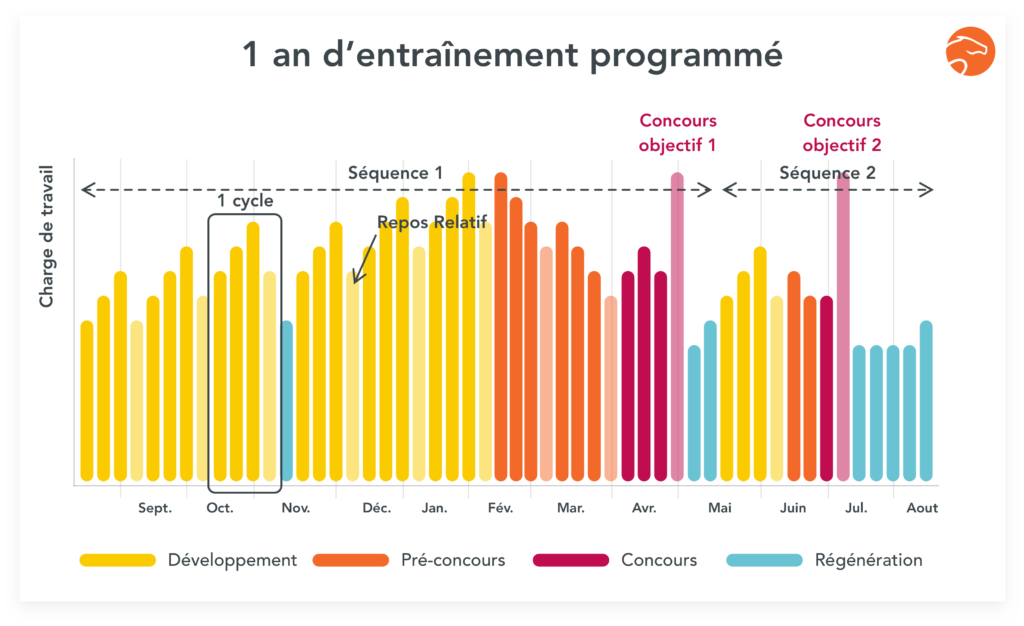
3. Build a 12-Month Training Plan
A yearly plan is structured in cycles, as in any high-level sport.
Also read: How to use the Equisense calendar to organize your daily routine
Cycle 1: Assessment & Foundation
- Analyze previous sessions
- Gradual reconditioning
- Work on gait consistency
🎯 Goal: Lay solid foundations without excessive intensity.
Cycle 2: Physical and Technical Development
- Gradually increase session duration
- Focused work on transitions and balance
- Introduce more technical exercises
🎯 Goal: Build physical condition and movement quality.
Cycle 3: Intensification / Sport Objective
- More demanding sessions
- Discipline-specific work
- Detailed analysis after each session
🎯 Goal: Reach peak performance.
Cycle 4: Active Recovery
- Shorter sessions
- Varied work (outdoors, different terrain)
- Maintain fitness without pressure
🎯 Goal: Preserve the horse physically and mentally.
Cycle 5: Consolidation & Adjustments
- Gradual return to intensity
- Correct weak points identified
- Stabilize performance
🎯 Goal: Cement progress over time.
Cycle 6: Annual Review and Planning
- Analyze annual Equisense data
- Compare performance metrics
- Set goals for 2027
🎯 Goal: Turn data into future strategy.
4. From Feel-Based Training to Measured Training
The Equisense app is more than a session tracker, it’s a true training ally. You can:
- Record each session and analyze your data in real time
- Track progress and automatically adjust goals
- Visualize performance with clear graphs and weekly or monthly summaries
With this approach, your New Year’s resolutions don’t remain intentions, they turn into tangible, measurable results.
It’s this regular analysis that transforms resolutions into real outcomes.
Train Like an Athlete in 2026
Plan, measure, adjust.
With Equisense, New Year’s resolutions are no longer just promises, they become a 12-month performance project built on data and strategy.